
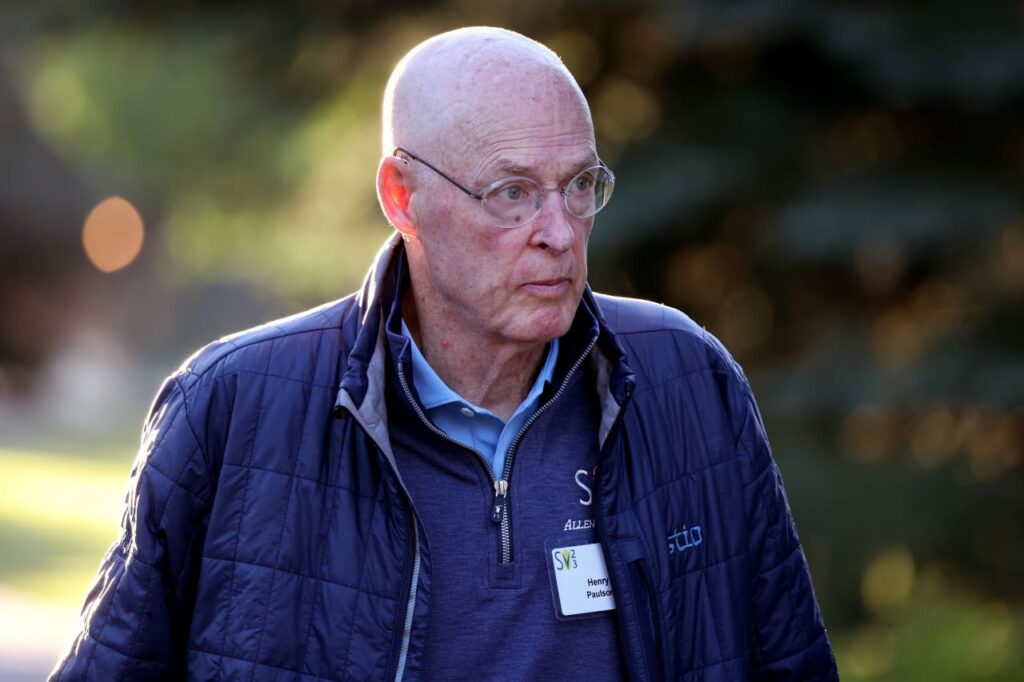
The stability of the U.S. financial system, and by extension the global economy, hinges significantly on the steady demand for U.S. Treasury bonds. It is this fundamental truth that underlies a recent urgent warning from former Treasury Secretary Henry Paulson, who has called on American policymakers to develop a robust emergency plan, a true 'break-the-glass' protocol, should the appetite for these critical government securities falter. Paulson's concern is stark: a severe disruption in the market for U.S. Treasurys could unleash devastating consequences across every sector of the economy, from inflation to financial market liquidity.
The Unseen Pillars: Why Treasury Demand Matters
U.S. Treasurys are the bedrock of the global financial system. They represent debt issued by the U.S. government to finance its operations and are universally considered among the safest assets in the world. Investors, ranging from central banks and large institutions to individual savers, flock to Treasurys for their perceived safety and liquidity. A consistent and robust demand for these bonds allows the U.S. government to borrow at manageable interest rates, keeping the cost of servicing its national debt under control. Moreover, Treasury yields serve as a benchmark for countless other financial instruments, influencing everything from mortgage rates to corporate borrowing costs. Any significant decline in Treasury demand would therefore send ripples through capital markets, impacting businesses and consumers alike.
Paulson's Dire Forecast: A 'Break-the-Glass' Scenario
As the Treasury Secretary during the 2008 financial crisis, Henry Paulson possesses a unique perspective on the fragility of financial markets and the necessity of proactive, decisive intervention. His call for an emergency 'break-the-glass' plan underscores the gravity of his concern regarding a potential collapse in Treasury demand. He envisions a scenario where a sudden and dramatic loss of investor confidence or a shift in global financial dynamics could drastically reduce the willingness of buyers to acquire U.S. government debt. Such an event would force the Treasury to offer higher interest rates to attract buyers, significantly increasing borrowing costs for the government and, by extension, for the entire economy.
Potential Triggers and Widespread Economic Fallout
While Paulson did not specify potential triggers, historical precedents and current economic headwinds suggest several possibilities. Persistent high inflation, concerns over U.S. fiscal sustainability, geopolitical shifts that impact investor sentiment, or a severe global economic downturn could all contribute to reduced Treasury demand. Should such a crisis unfold, the economic consequences would be profound. Higher government borrowing costs could lead to increased taxes or cuts in public spending, potentially slowing economic growth. Financial markets could experience extreme volatility, with a sharp increase in interest rates causing asset values to plummet. The ripple effect would impact everything from corporate earnings and employment levels to the stability of the U.S. dollar, potentially precipitating a deep recession or even a global financial contagion.
The Imperative for Preparedness
Paulson's warning is not merely a prediction of doom but an urgent appeal for preparedness. Developing a 'break-the-glass' plan means identifying potential intervention mechanisms, establishing clear lines of communication and authority, and perhaps even stress-testing scenarios to ensure that policymakers can react swiftly and effectively if Treasury demand dramatically weakens. Such a plan might involve extraordinary measures from the Federal Reserve to stabilize markets, coordinated action with international partners, or pre-approved fiscal strategies to restore confidence. The objective is to have a framework in place that can mitigate the immediate shock and lay the groundwork for a recovery, protecting the U.S. and global economies from the worst effects of a crisis in its most vital bond market.
The former Treasury Secretary's insight serves as a powerful reminder that while the U.S. Treasury market has long been a bastion of stability, its resilience is not immutable. Proactive planning and a clear strategy for unforeseen challenges are essential to safeguard the nation's financial health and maintain confidence in the cornerstone of global finance, especially given the ongoing focus on factors that influence Treasury demand.
Fonte: https://www.marketwatch.com