
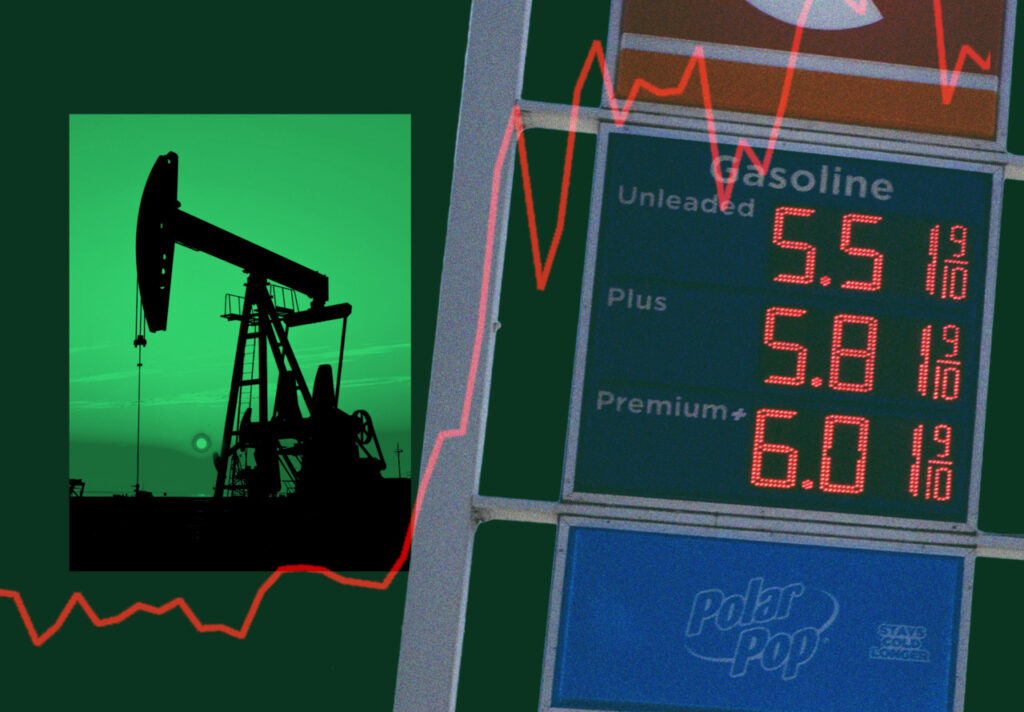
Across the United States, motorists are facing persistent frustration at the pump as gasoline prices remain elevated, often reaching levels not seen in years. This situation sparks widespread concern about inflationary pressures and their potential drag on the broader economy. A common point of bewilderment for many Americans is understanding why these high costs persist, especially given that the U.S. stands as the world's leading producer of crude oil. The paradox raises a critical question: if domestic oil output is at record highs, what complex factors are truly driving up gasoline prices?
The Global Nature of Crude Oil Markets
The fundamental misconception often lies in viewing crude oil as a purely domestic commodity. In reality, crude oil is a globally traded resource, meaning its price is dictated by a vast international network of supply and demand, geopolitical events, and market speculation, rather than solely by any single nation's production levels. Even though the U.S. is a prodigious producer, a significant portion of its output is exported, and it also imports various grades of crude tailored to specific refinery needs. This constant global interchange ensures that American consumers are inherently linked to the dynamics of the international oil market, where factors like production decisions by OPEC+ countries, global economic growth forecasts, and international conflicts exert immense influence on prices.
From Crude to the Pump: The Refining Process
A crucial distinction must be made between crude oil and the finished product Americans fill their tanks with: gasoline. Crude oil is merely the raw ingredient. It must undergo a complex and energy-intensive refining process to be transformed into gasoline, along with other petroleum products like diesel and jet fuel. Refineries are specialized facilities designed to break down crude oil into its various components. The availability and efficiency of these refineries play a significant role in gasoline prices, often more directly than the volume of crude oil extracted from the ground.
U.S. refining capacity has faced challenges in recent years, including planned and unplanned outages for maintenance, permanent closures of older facilities, and a general reluctance to build new ones due to environmental regulations and substantial capital investment requirements. When refining capacity is constrained, even an abundance of crude oil can't translate directly into lower gasoline prices because there isn't enough infrastructure to process it efficiently into usable fuel. Furthermore, different regions require specific blends of gasoline, especially during summer months, adding another layer of complexity and cost to the refining process.
Beyond the Barrel: Other Key Determinants of Gasoline Prices
While crude oil prices and refining costs form the largest components, several other significant factors contribute to the final price consumers pay at the pump. These elements add layers of cost that are largely independent of domestic oil production figures.
Taxes, Distribution, and Retail Margins
A substantial portion of gasoline prices consists of federal and state taxes. These levies vary significantly by state, contributing to the disparities seen across different regions. Beyond taxes, the cost of transporting gasoline from refineries to distribution terminals and then to individual gas stations adds to the total. This involves pipelines, trucks, and sometimes barges, all incurring operational expenses. Finally, retail margins, which cover the gas station's operating costs, labor, and profit, form the smallest but still essential component of the pump price. These elements collectively mean that even if crude oil were free, gasoline would still have a considerable cost due to processing, taxes, and delivery.
Seasonal Demand and Geopolitical Influence
Seasonal variations in demand also exert pressure on gasoline prices. During peak driving seasons, such as summer holidays, increased consumer demand naturally pushes prices higher. Refiners also switch to more expensive summer-blend gasoline to meet environmental regulations, further impacting costs. Furthermore, geopolitical events, even those seemingly distant from American borders, can send ripples through the global oil market, affecting crude oil prices and subsequently gasoline prices. Supply disruptions, sanctions, or heightened tensions in oil-producing regions can trigger panic buying or speculation, leading to immediate price surges regardless of U.S. domestic production levels.
Inventory Levels and Speculation
The levels of crude oil and refined product inventories play a crucial role. Lower-than-expected stock levels can signal potential future supply shortages, prompting traders to bid up prices on futures markets. This speculative trading, where financial players bet on future price movements, can amplify price swings, often detaching short-term prices from current physical supply-demand fundamentals. A perception of scarcity, even if temporary, can thus have an outsized impact on immediate gasoline prices.
Ultimately, the answer to why gasoline prices remain high despite the U.S. leading global oil production lies in a confluence of interconnected factors. The price at the pump is not simply a reflection of domestic crude oil output but a complex equation influenced by global market dynamics, the intricacies and limitations of refining capacity, the burden of taxes, the costs of distribution, seasonal demand shifts, geopolitical instability, and the impact of financial market speculation. Understanding this multifaceted reality is key to comprehending why the journey from a barrel of crude to a gallon of gasoline is anything but straightforward for the American consumer.
Fonte: https://www.marketwatch.com