
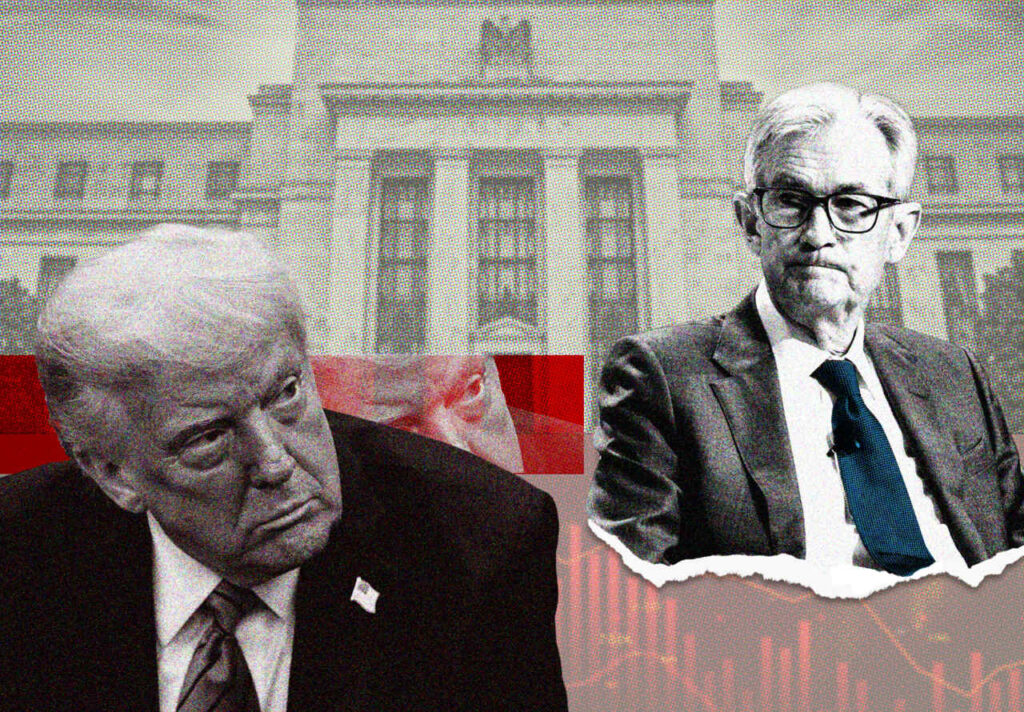
A remarkable power struggle continues to unfold between the Trump administration and the leadership of the nation's central bank, the Federal Reserve. Despite current Fed Chair Jerome Powell's term in that specific role drawing to a close in merely a month, President Donald Trump and officials within the Department of Justice show no signs of easing their efforts to remove him. This persistent pressure, even with the clock ticking down on Powell's tenure as Fed Chair, underscores a deeper conflict regarding the independence and direction of the Federal Reserve.
The Unconventional Pursuit of a Departure
The situation presents an unusual political tableau: an administration actively seeking the dismissal of a high-ranking official whose term is already on the verge of expiring. Typically, such efforts precede significant time remaining in an officeholder's mandate, or are reserved for scenarios of gross misconduct. The continued vigor with which President Trump and his team, including Justice Department officials, pursue Fed Chair Jerome Powell's removal suggests more than mere policy disagreement; it points to a symbolic battle over institutional autonomy and presidential authority. This 'eleventh-hour' challenge has raised eyebrows across Washington and in financial circles, prompting questions about the motivations behind such a sustained campaign.
A Challenge to Federal Reserve Independence
At the heart of this dispute lies the long-standing principle of the Federal Reserve's independence. Designed to operate free from direct political interference, the Fed's ability to set monetary policy without short-term political pressures is widely considered crucial for economic stability. President Trump's repeated public criticisms of Fed Chair Jerome Powell and the central bank's policies, culminating in these active efforts to force a resignation or removal, are seen by many as a direct assault on this vital institutional independence. Even if Powell's term as Fed Chair is set to end, the administration's aggressive posture could establish a precedent for future presidential intervention, potentially undermining confidence in the Fed's impartiality.
Presidential Powers and the Path to Dismissal
The legal avenues for a president to remove a Fed Chair are complex and largely untested. While the President nominates the Fed Chair and other governors to the Federal Reserve Board, the ability to dismiss them without cause is a contentious legal question. The involvement of Department of Justice officials indicates a deep dive into the legal frameworks and historical precedents that govern such actions. Historically, Federal Reserve chairs have enjoyed considerable security in their positions to shield them from political retribution. Any successful attempt to oust Fed Chair Jerome Powell before his term naturally concludes could ignite a significant constitutional debate and reshape the balance of power between the executive branch and independent agencies.
Implications for Economic Stability and Governance
The protracted standoff carries substantial implications beyond the political sphere. Financial markets thrive on certainty and predictability, especially concerning the institutions responsible for monetary policy. The public nature of this dispute and the continuous threat to the leadership of the Federal Reserve can introduce an element of instability and potentially erode investor confidence. Moreover, the broader ramifications for governance could be profound. Should a president successfully assert the power to dismiss an independent agency head without established cause, it could weaken the checks and balances designed to prevent the politicization of critical governmental functions, impacting not just the Federal Reserve but other independent bodies as well.
As the final weeks of Fed Chair Jerome Powell’s term tick away, the administration's unwavering push for his removal casts a long shadow over the transition. Regardless of the outcome, this episode is poised to be a defining moment in the history of the Federal Reserve, raising critical questions about institutional independence, presidential authority, and the future stability of economic policy in the United States. The persistent efforts to unseat Powell, even at this late stage, underscore a determined effort by the executive branch to exert control over an entity designed to operate outside the immediate political fray.
Fonte: https://www.marketwatch.com