
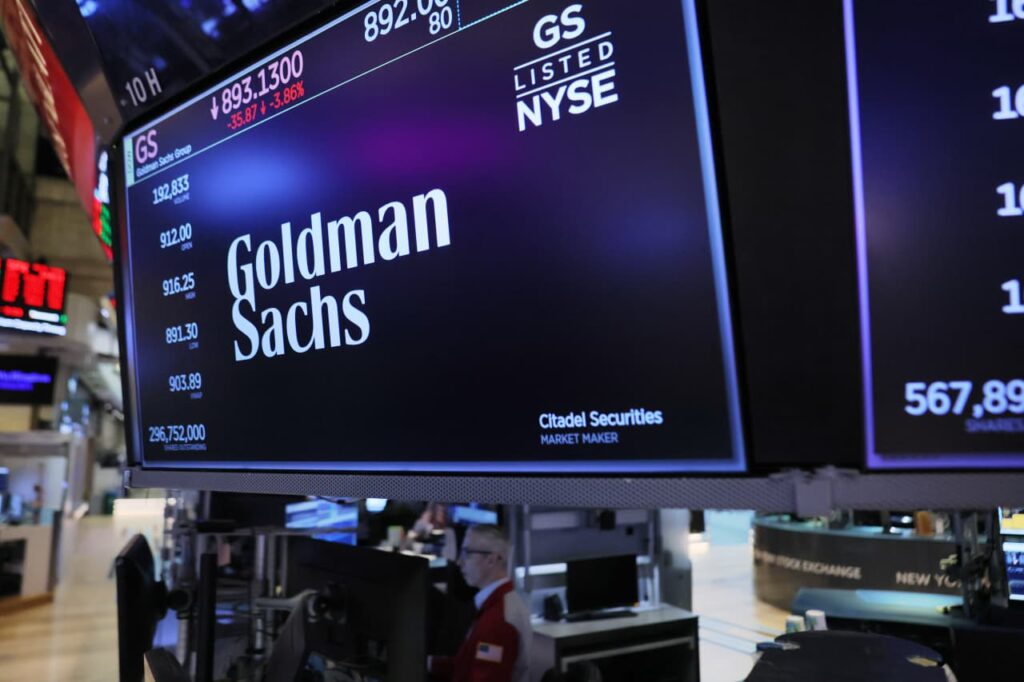
In the fiercely competitive landscape of the S&P 500, where corporations vie for investor confidence and market supremacy, a select few manage to consistently distinguish themselves. Among these elite performers, investment banking giant Goldman Sachs has achieved a remarkable feat, earning a top-tier ranking for its unwavering commitment to shareholder rewards. This distinction underscores the firm's strategic prowess in not only generating substantial profits but also effectively translating that success into tangible value for its investors over an extended period.
A Legacy of Shareholder Value Creation
For institutional and individual investors alike, the appeal of a stock often hinges on its capacity to deliver consistent returns. Goldman Sachs has long demonstrated a robust framework for capital allocation, prioritising mechanisms that directly benefit its shareholders. This isn't merely about impressive quarterly earnings; it's about a sustained strategy that combines prudent financial management with a clear vision for investor prosperity, positioning the firm as a benchmark for shareholder-centric corporate governance within the S&P 500.
The Pillars of Consistent Capital Returns
The consistent rewarding of shareholders by Goldman Sachs is built upon a multi-pronged approach. A significant component is its disciplined dividend policy, providing a steady income stream that signals financial strength and confidence in future earnings. This commitment to regular payouts ensures that investors receive a direct share of the company’s success, contributing to overall total shareholder return even amidst market volatility.
Beyond dividends, Goldman Sachs has strategically utilized share repurchase programs to enhance shareholder value. By reducing the number of outstanding shares, these buybacks effectively boost earnings per share and contribute to stock price appreciation. This tactical deployment of capital reflects a management team focused on optimizing the company’s valuation and returning excess capital efficiently to its owners, thereby reinforcing its standing among the S&P 500’s top performers in shareholder value.
Crucially, these financial strategies are underpinned by the firm's robust core businesses. Its leading position in investment banking, global markets, and asset management consistently drives strong revenue growth and profitability. The ability of Goldman Sachs to navigate complex global financial landscapes, adapt to evolving market conditions, and capture new opportunities ensures a powerful engine for long-term value creation, which in turn fuels its capacity to reward shareholders consistently.
Navigating Market Dynamics with Stability
Maintaining a top-tier ranking for shareholder rewards, especially within the volatile financial sector, speaks volumes about a company’s operational resilience and strategic foresight. Goldman Sachs has repeatedly demonstrated its ability to weather economic downturns and capitalize on upturns, thanks to its diversified revenue streams, stringent risk management frameworks, and agile leadership. This stability is a cornerstone of its consistent shareholder value proposition, offering a degree of predictability that is highly coveted by investors.
The firm’s continuous investment in technology, talent, and strategic growth initiatives also plays a vital role in sustaining its competitive edge. By staying at the forefront of financial innovation and market trends, Goldman Sachs ensures its relevance and profitability for years to come, further solidifying its ability to consistently reward its shareholder base. This proactive approach to growth and adaptation is integral to its enduring success and its distinguished position in the S&P 500.
Ultimately, the achievement of Goldman Sachs in consistently rewarding its shareholders is a testament to its deeply embedded culture of performance and its unwavering commitment to financial excellence. For investors seeking reliable returns and long-term growth potential within the S&P 500, the firm stands out as a compelling example of strategic capital management and robust corporate performance.
Fonte: https://www.marketwatch.com