
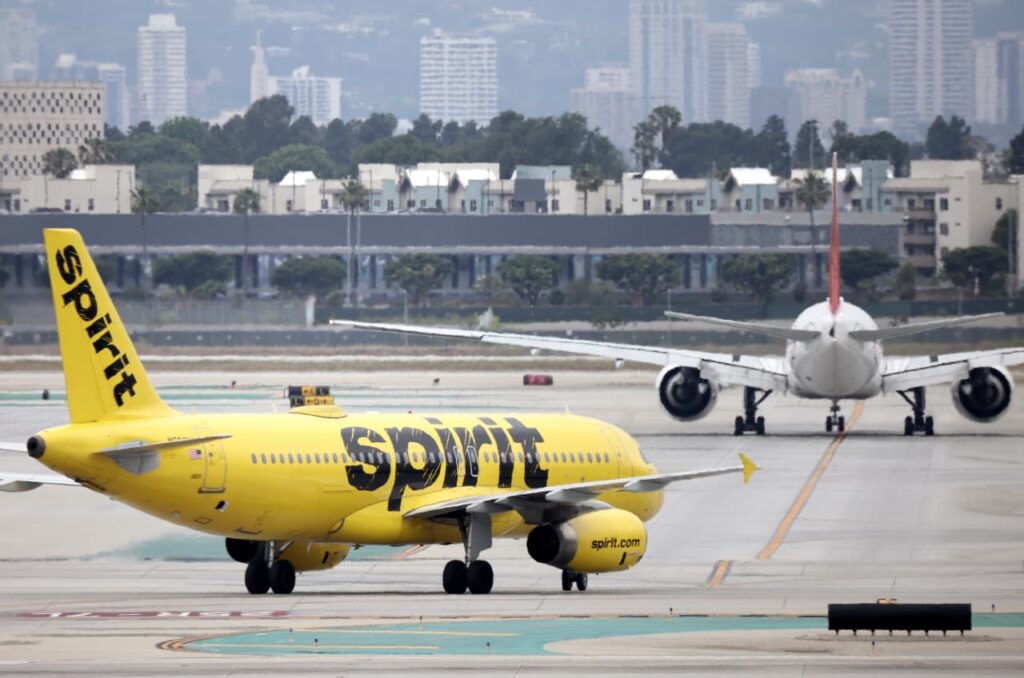
The highly competitive landscape of the airline industry is constantly shifting, and few scenarios would trigger a more profound realignment than the potential shutdown of a major player like Spirit Airlines. Plagued by persistent financial challenges and the recent collapse of its merger attempt with JetBlue, Spirit's future remains a subject of intense speculation. Should the ultra-low-cost carrier cease operations, it would not only send ripples through the travel market but also present an unparalleled opportunity for other airlines to strategically expand their networks, acquire valuable assets, and consolidate their market positions.
The Strategic Void Left by an Ultra-Low-Cost Carrier
Spirit Airlines has carved out a distinct niche as a prominent ultra-low-cost carrier (ULCC), appealing to price-sensitive travelers with its no-frills model. Its extensive network spans a mix of leisure destinations, secondary airports, and select major hubs. A Spirit Airlines shutdown would instantly free up a significant number of precious airport slots and gates, particularly at congested facilities where access is tightly controlled. These assets are highly coveted in the industry, representing immediate capacity for growth that is otherwise scarce and expensive to obtain. Furthermore, Spirit's routes, many of which cater to popular vacation spots, would suddenly become available, opening new avenues for competitors.
Beyond physical infrastructure, the cessation of Spirit’s flights would also eliminate a major source of low-fare competition. This could lead to a re-evaluation of pricing strategies across the industry, potentially allowing other carriers to command higher fares on routes where Spirit previously exerted downward pressure. The market would effectively see a reduction in overall capacity and a redistribution of millions of annual passengers, prompting rivals to vie for this suddenly available demand.
Opportunities for Direct Competitors
Fellow Ultra-Low-Cost Carriers
The most immediate beneficiaries of a Spirit Airlines shutdown would likely be other ultra-low-cost carriers. Airlines like Frontier and Allegiant operate under similar business models and often compete directly with Spirit on many routes. They would be well-positioned to absorb a substantial portion of Spirit's customer base, acquire its Airbus A320 family aircraft (which they often already operate, simplifying integration), and take over key airport infrastructure. Expanding into Spirit’s former footprint would allow these carriers to rapidly increase their scale and solidify their market share in the budget travel segment without the usual hurdles of organic growth.
Low-Cost Giants Eyeing Expansion
Mid-tier low-cost airlines such as Southwest and JetBlue also stand to gain. Southwest, with its point-to-point model and focus on efficiency, could strategically expand into certain leisure markets or acquire gates at airports where Spirit held desirable positions. JetBlue, having recently seen its acquisition of Spirit blocked, might view a shutdown as a bittersweet opportunity to pick up assets and routes it coveted. Both carriers could leverage their strong brands and operational capabilities to attract former Spirit passengers looking for value-oriented travel with a slightly elevated service experience.
Legacy Carriers and the Broader Market Impact
Even the legacy carriers – American, Delta, and United – could find strategic advantages. While they typically don't compete directly on price with ULCCs, a Spirit Airlines shutdown would reduce overall industry capacity, which generally benefits full-service airlines by easing competitive pressures. They could also selectively acquire valuable slots and gates at their major hubs, using them to expand their own operations, enhance connectivity, or even launch their own low-cost subsidiaries if they chose to enter certain markets more aggressively. The reduction in ultra-low-cost seats could also lead to a general uplift in average airfares across the industry, improving profitability for all remaining players.
Furthermore, a significant number of Spirit's skilled personnel, including pilots, flight attendants, and maintenance staff, would become available. These highly trained individuals would be a valuable asset for any airline looking to expand, helping to alleviate staffing shortages that have sometimes plagued the industry. This human capital, combined with potential aircraft acquisitions, would represent a holistic opportunity for growth.
A Complex Acquisition Landscape
While the prospect of a Spirit Airlines shutdown offers numerous opportunities, the process of asset redistribution would be complex. Regulatory bodies would scrutinize any major acquisition of slots or routes to ensure fair competition. Airlines would need to carefully evaluate which assets align with their long-term strategic goals and possess the operational capacity to seamlessly integrate new aircraft, routes, and personnel. The process would be competitive, with various airlines aggressively bidding for the most attractive pieces of Spirit's former network, ultimately reshaping the competitive landscape for years to come.
The ultimate outcome of such a scenario would be a significantly altered airline industry. While travelers might face fewer ultra-low-cost options initially, the redistribution of Spirit's valuable assets would undoubtedly catalyze growth and strategic realignment among its remaining competitors, offering them unprecedented avenues for expansion and market consolidation.
Fonte: https://www.marketwatch.com