
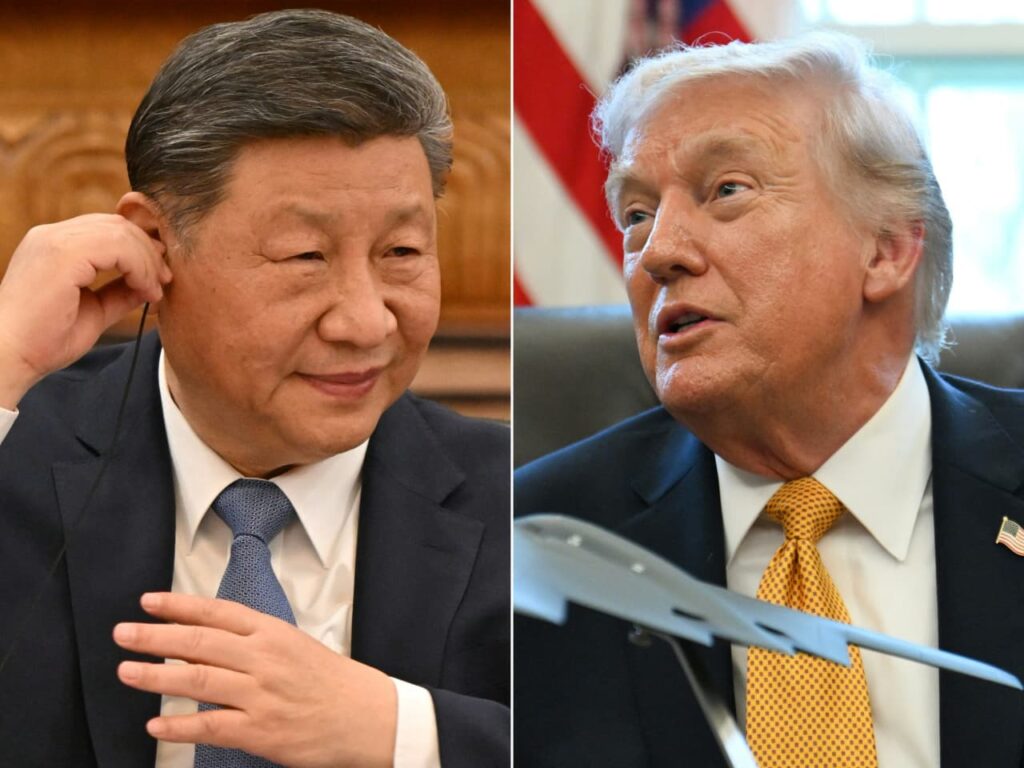
The prospect of a high-level U.S. delegation engaging with China, especially one potentially led by a former President and accompanied by a formidable cohort of American business leaders, invariably carries immense geopolitical and economic weight. Such an engagement would place a critical spotlight on a triumvirate of contentious issues that define the intricate U.S.-China relationship: the complexities of global trade, the perennial flashpoint of Taiwan, and the volatile dynamics surrounding Iran. As the global landscape continues to shift, understanding the multi-faceted stakes involved in these discussions is paramount for international stability and prosperity.
Navigating the Economic Minefield: Trade Relations
At the forefront of any dialogue between the United States and China remains the thorny issue of trade. For years, economic ties have been characterized by a delicate balance of cooperation and fierce competition, punctuated by tariffs, intellectual property disputes, and debates over market access. A delegation featuring top American CEOs underscores the significant commercial interests at play. These business leaders are eager for stability, predictability, and fair competition, often advocating for a reduction in trade barriers, protection of their investments, and an even playing field for U.S. companies operating within China. The discussions would likely delve into the future of global supply chains, the imperative for fair technology transfer practices, and the broader implications of each nation's industrial policies on the world economy. Resolving these economic tensions is crucial not only for the two giants but also for the health of the global trading system.
Taiwan: A Geopolitical Flashpoint with Global Ramifications
Perhaps the most sensitive and potentially volatile issue on the agenda is Taiwan. China views Taiwan as an integral part of its territory, a core national interest that permits no foreign interference. The United States, while acknowledging the 'One China' policy, also maintains robust unofficial relations with Taiwan and has committed to providing the island with the means to defend itself. The presence of a high-level U.S. delegation provides an opportunity, however precarious, to address this complex relationship directly. Discussions would undoubtedly touch upon the implications of military activities in the Taiwan Strait, the strategic semiconductor industry that heavily relies on Taiwan, and the broader regional security architecture. Any misstep or miscommunication on this front could have profound and destabilizing consequences far beyond the immediate region, highlighting the extreme geopolitical stakes involved.
The Iran Conundrum: A Shared, Yet Divergent, Challenge
The Middle East, specifically the nuclear ambitions and regional activities of Iran, represents another critical point of discussion. While both the U.S. and China have an interest in preventing nuclear proliferation and maintaining stability in the Persian Gulf, their approaches to Iran often diverge. The United States has historically pursued a policy of sanctions and diplomatic pressure, particularly regarding Iran's nuclear program and support for proxy groups. China, on the other hand, is a significant energy consumer and has maintained economic ties with Iran, often playing a more nuanced diplomatic role. A U.S. delegation would likely seek China's cooperation in isolating Iran or influencing its behavior, particularly concerning its nuclear program and maritime security. Balancing the pursuit of non-proliferation with energy security interests and regional stability in the Middle East will be a delicate tightrope walk, testing the limits of U.S.-China cooperation amidst their broader strategic competition.
The Role of Business Leaders in Shaping Policy
The inclusion of an 'army of CEOs' in such a delegation is not merely symbolic; it represents a powerful force advocating for American commercial interests and influencing diplomatic outcomes. These business leaders often bring practical perspectives on economic realities, supply chain resilience, and the impact of geopolitical tensions on global markets. Their direct engagement with Chinese counterparts and officials can open channels for dialogue beyond traditional government-to-government interactions. While their primary focus is typically on profitability and market access, their collective voice can also underscore the economic interdependence between the two nations, potentially serving as a stabilizing factor in a relationship often fraught with friction. Their presence highlights the multifaceted nature of U.S.-China relations, where economic imperatives are inextricably linked to political and security considerations.
Conclusion: A Delicate Balance for Global Stability
Ultimately, any high-level engagement between the U.S. and China, particularly one involving a prominent former U.S. President and key industry figures, is a high-stakes endeavor with far-reaching implications. The agenda—encompassing trade disputes, the delicate status of Taiwan, and the complex challenge of Iran—reflects the most pressing issues shaping the 21st century's geopolitical landscape. Success hinges on a careful balance of asserting national interests, fostering open communication, and recognizing areas of mutual concern. The outcomes of such discussions will not only redefine the trajectory of U.S.-China relations but also significantly influence the contours of global peace, economic prosperity, and international cooperation for years to come.
Fonte: https://www.marketwatch.com