
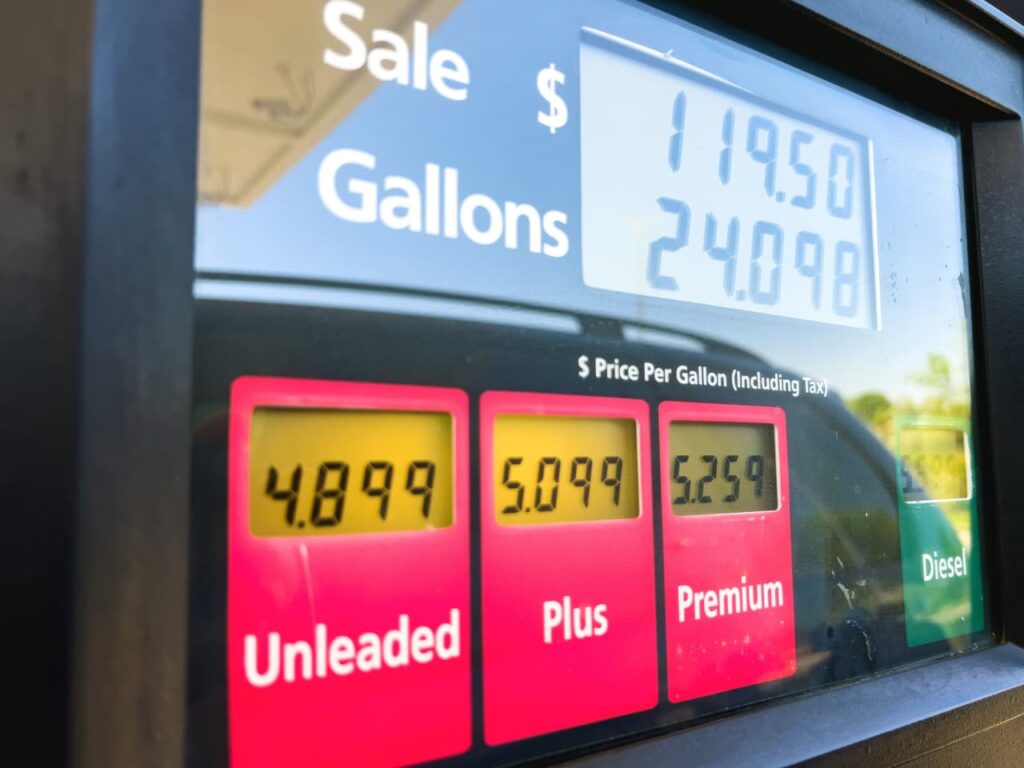
Global financial markets are often quick to react to tangible economic threats like rising inflation or escalating energy prices. When geopolitical tensions flare, particularly in critical regions such as the Middle East, the immediate spotlight often falls on crude oil benchmarks and consumer price indices. However, an even more insidious and damaging force quietly erodes investor confidence and economic stability: profound uncertainty. While economies possess mechanisms to adapt to consistently higher energy costs or even manage inflationary pressures over time, they struggle immensely under the weight of an unpredictable and volatile geopolitical landscape, especially concerning flashpoints like those involving Iran. This article explores why the true “tax” imposed by such instability is not merely inflation, but the paralysis induced by a climate of pervasive uncertainty.
The Tangible vs. The Intangible Threat
Economies, for all their complexities, exhibit remarkable resilience when facing quantifiable challenges. Businesses can factor in higher input costs, consumers can adjust spending habits, and central banks can employ monetary tools to combat inflation. Even sustained periods of elevated energy prices, while painful, often spur innovation in renewables, drive efficiency improvements, and encourage diversification of energy sources. Markets, to a degree, can price in known risks. However, the volatile and unpredictable nature of geopolitical crises, particularly those with the potential to disrupt global trade routes or ignite regional conflicts, introduces a level of ambiguity that asset prices struggle to reflect accurately. This distinction between a measurable risk and an unquantifiable uncertainty is crucial for understanding its corrosive impact.
Adapting to Higher Energy Costs
History shows that while sudden spikes in energy prices can be disruptive, a new, consistently higher price floor can eventually be integrated into economic models. Industries adapt by investing in energy-efficient technologies, supply chains optimize logistics, and governments may incentivize alternative energy production. This allows for a degree of planning and strategic adjustment, preventing a complete breakdown of economic activity. The challenge lies not just in the price level itself, but in the fluctuation and unpredictability surrounding it, often a direct consequence of escalating geopolitical tensions involving Iran and the broader Middle East.
Uncertainty: The Ultimate Market Disruptor
The true cost of geopolitical instability, therefore, manifests most profoundly as widespread uncertainty. When the future becomes clouded by the specter of potential conflict, policy shifts, or supply disruptions emanating from regions like the Middle East involving Iran, rational economic decision-making falters. This pervasive sense of doubt permeates every level of the financial ecosystem, from multinational corporations planning multi-year investments to small businesses making hiring decisions, and even individual consumers considering major purchases. The lack of clarity on future conditions — be it energy availability, trade relations, or security — becomes a powerful deterrent to growth.
Investment Paralysis and Risk Aversion
Perhaps the most damaging effect of heightened uncertainty is its ability to “squelch investment.” Companies faced with unpredictable geopolitical risks often adopt a defensive posture. Capital expenditures are postponed, mergers and acquisitions are put on hold, and innovative research and development projects are scaled back or scrapped entirely. Instead of deploying capital for long-term growth, firms may hoard cash, prioritize short-term returns, or seek out safe-haven assets. This shift from productive investment to risk aversion starves the economy of the capital needed for expansion, job creation, and technological advancement, ultimately stifling economic growth over the long run.
Erosion of Confidence and Economic Stagnation
Beyond direct investment, geopolitical uncertainty significantly erodes both business and consumer confidence. Businesses become hesitant to expand, hire, or commit to new ventures when the stability of supply chains, market access, or even national security is in question. Consumers, worried about potential economic downturns or personal financial insecurity stemming from larger global events, may curtail discretionary spending, leading to a slowdown in retail and service sectors. This widespread lack of confidence creates a vicious cycle, where reduced spending and investment reinforce negative outlooks, paving the way for economic stagnation or even recession, far beyond the direct impact of commodity price fluctuations.
In conclusion, while the immediate focus on inflation and energy prices during periods of heightened geopolitical tension around Iran is understandable, these are often just symptoms of a deeper ailment. The truly debilitating “tax” on global markets is the profound uncertainty that such instability generates. It is this climate of unpredictability that paralyzes investment, fosters risk aversion, and erodes confidence across all facets of the economy, ultimately costing far more in lost opportunity and stunted growth than any temporary surge in commodity prices. For sustainable economic prosperity, fostering an environment of stability and predictability, rather than merely mitigating price fluctuations, remains paramount.
Fonte: https://www.marketwatch.com