
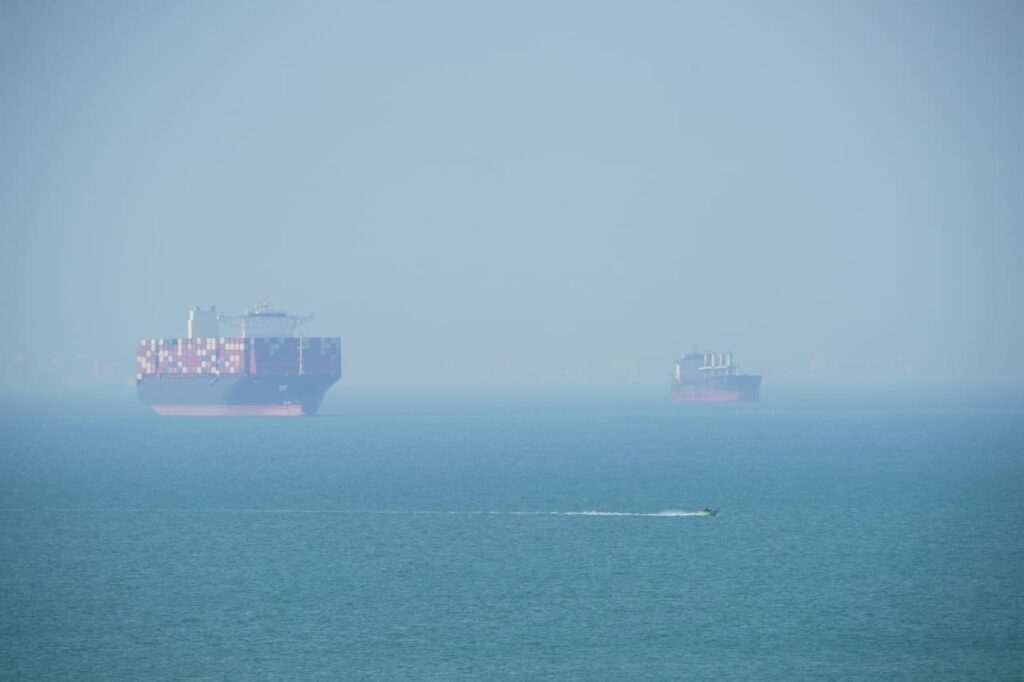
President Donald Trump’s recent declaration regarding efforts to liberate neutral shipping vessels stranded in the Persian Gulf has been met with palpable skepticism from investors. The announcement, made on a Sunday, outlined a commitment by the United States to 'free' these vessels, which have been immobilized amid escalating tensions and sporadic hostilities with Iran. However, financial markets and analysts quickly expressed doubt, questioning the feasibility and specifics of such a plan in one of the world's most critical and volatile maritime chokepoints.
The Geopolitical Crucible of the Strait of Hormuz
The Strait of Hormuz, a narrow waterway connecting the Persian Gulf to the open ocean, is a strategic linchpin for global energy supply. Approximately one-fifth of the world's total oil consumption, along with a significant volume of liquefied natural gas, passes through this strait daily. Its immense importance makes it a frequent flashpoint in regional conflicts. In recent times, heightened friction between the U.S. and Iran has led to numerous incidents, including tanker seizures, drone shoot-downs, and attacks on shipping, creating an environment of instability that has left some vessels wary or unable to navigate the area freely.
A Declaration of Intent: Trump's Pledge for Freedom of Navigation
President Trump’s statement signaled a renewed focus on ensuring freedom of navigation in the Persian Gulf. While the precise details of how the U.S. intends to 'free' the neutral shipping were not elaborated upon, the announcement implied a more assertive stance aimed at de-escalating the maritime blockade or intimidation that has kept vessels moored. The expectation is that any such move would involve increased naval presence or diplomatic pressure to facilitate safe passage through the contested waters, especially the Strait of Hormuz, which has seen repeated disruptions.
Navigating a Volatile Environment
The operational complexities of securing neutral shipping in a region as volatile as the Persian Gulf are immense. Any direct intervention carries inherent risks of escalating tensions further, potentially provoking a stronger response from Iran and endangering naval assets or commercial vessels. Experts point out that a credible plan would require not only military readiness but also robust diplomatic backing and clear rules of engagement to avoid miscalculation in an already sensitive area.
Why Investors Remain Unconvinced
Investor skepticism stems from several factors. Firstly, the lack of concrete operational details in the President’s statement raised red flags. Without a clear strategy, timeline, or resource allocation, the announcement appeared to be more of a political declaration than a tangible action plan. Secondly, the history of U.S.-Iran relations in the region is fraught with failed initiatives and unpredictable outcomes, leading markets to adopt a 'wait and see' approach. Concerns also revolve around the potential for any intervention to exacerbate, rather than alleviate, the conflict, thereby increasing geopolitical risk premiums for shipping, insurance, and energy commodities. Economic stakeholders prioritize stability and predictability, elements currently lacking in the Strait of Hormuz.
The Broader Stakes for Global Trade and Energy
The ongoing disruptions in the Strait of Hormuz have far-reaching implications for global trade and energy security. Delays, increased insurance costs, and rerouting significantly impact supply chains and commodity prices. A sustained blockage or continued threat to shipping in the Persian Gulf could send shockwaves through international oil markets, potentially leading to price spikes and broader economic instability. Therefore, while a plan to free stranded vessels is welcomed in principle, its execution must be carefully managed to prevent unintended consequences that could further destabilize the region and global economy.
Ultimately, turning a political declaration into a credible solution for the Strait of Hormuz will require more than just intent. Investors are signaling that confidence will only return when a clear, well-articulated, and de-escalatory strategy is presented to safeguard commercial shipping, ensuring the continued flow of vital resources through this indispensable global artery. Until then, the waters of the Persian Gulf are likely to remain turbulent, both geopolitically and financially.
Fonte: https://www.marketwatch.com