
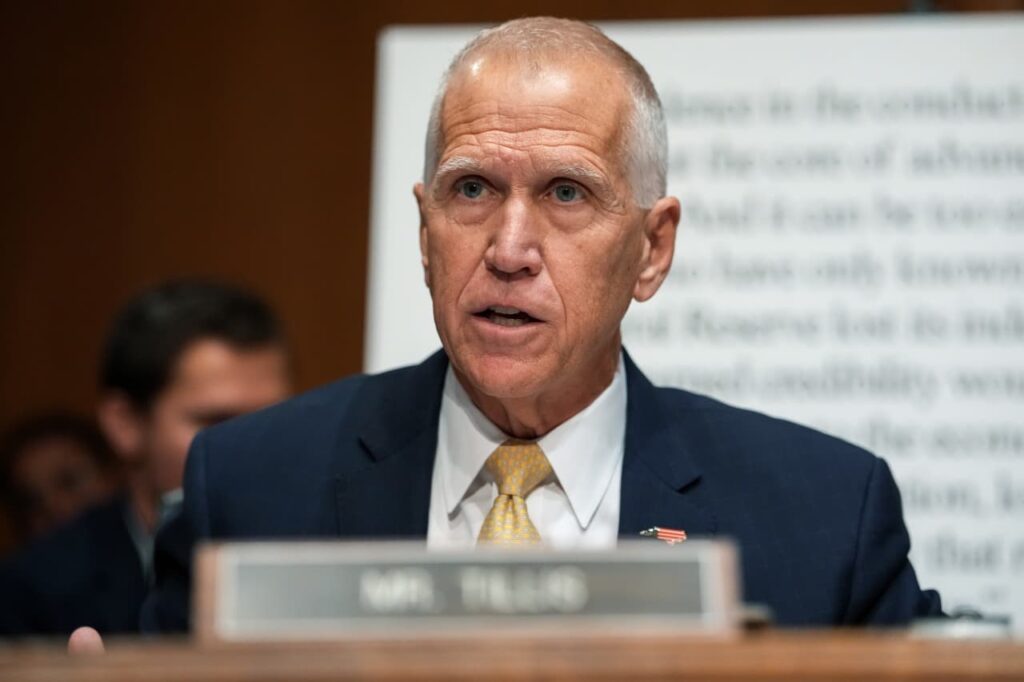
In a significant development that could reshape the future leadership of the nation's central bank, Senator Thom Tillis (R-NC) announced Sunday his readiness to support the confirmation of Kevin Warsh as the next Chair of the Federal Reserve. This pivotal shift in stance comes on the heels of the Justice Department's decision to drop its criminal case against outgoing Chair Jerome Powell, a resolution that appears to have cleared the path for the influential senator's endorsement.
A Pivotal Shift in Senate Support
Senator Tillis's declaration marks a notable turnaround from his previous position, injecting new momentum into Kevin Warsh's bid for one of the most powerful economic roles globally. The Federal Reserve Chair plays a critical role in guiding monetary policy, influencing everything from interest rates to inflation, and ultimately impacting the financial well-being of millions of Americans. Gaining support from a key Republican senator like Tillis could prove crucial in what is often a closely contested confirmation process.
The confirmation of a Federal Reserve Chair requires a majority vote in the Senate. Each senator's position holds considerable weight, and a public endorsement, especially following a prior period of opposition, signals a potential consolidation of support for the nominee. This latest pronouncement by Senator Tillis undoubtedly adds a new dynamic to the ongoing discussions surrounding the leadership transition at the Fed, bringing Kevin Warsh's potential ascent into sharper focus.
The Context of the DOJ's Decision
The timing of Senator Tillis's announcement is directly linked to the Justice Department's recent decision to discontinue its criminal case against current Federal Reserve Chair Jerome Powell. While the specifics of the case remain largely confidential, its resolution removes a significant political overhang that had cast a shadow over the institution. This development could be seen as having stabilized the broader environment surrounding Federal Reserve appointments, perhaps addressing concerns that previously deterred Tillis.
For many observers, the resolution of legal proceedings against a sitting or outgoing official can often pave the way for a smoother political transition. By clearing the air around Chair Powell, the Justice Department's action may have created a more favorable climate for the Senate to consider new leadership without the distraction of ongoing investigations. Senator Tillis's statement suggests that this legal conclusion played a direct role in his reassessment of Warsh's candidacy for the highly scrutinized position of Federal Reserve Chair.
What This Means for Kevin Warsh and the Fed
Kevin Warsh, a former member of the Federal Reserve Board of Governors and an economic advisor, brings a robust background in finance and monetary policy to the nomination. His potential leadership comes at a time of complex economic challenges, requiring steady stewardship and decisive action. With Senator Tillis now publicly endorsing his confirmation, Warsh's path to becoming Federal Reserve Chair may have become considerably clearer, though the full Senate vote still lies ahead.
The significance of gaining bipartisan or broader party support for a Federal Reserve Chair nominee cannot be overstated. A strong mandate from the Senate lends credibility and stability to the central bank's operations, both domestically and on the international stage. As the confirmation process moves forward, all eyes will be on how this shift by Senator Tillis influences other undecided senators and ultimately shapes the future direction of the Federal Reserve under potential new leadership.
Senator Thom Tillis's declaration to back Kevin Warsh for Federal Reserve Chair marks a critical turning point in the nomination process. Directly attributed to the Justice Department's resolution of its case against Jerome Powell, this endorsement not only strengthens Warsh's prospects but also underscores the intricate interplay between political considerations, legal developments, and the crucial appointments to the nation's most vital economic institutions. The upcoming confirmation hearings will undoubtedly reflect this new alignment, setting the stage for who will next lead the Federal Reserve.
Fonte: https://www.marketwatch.com