
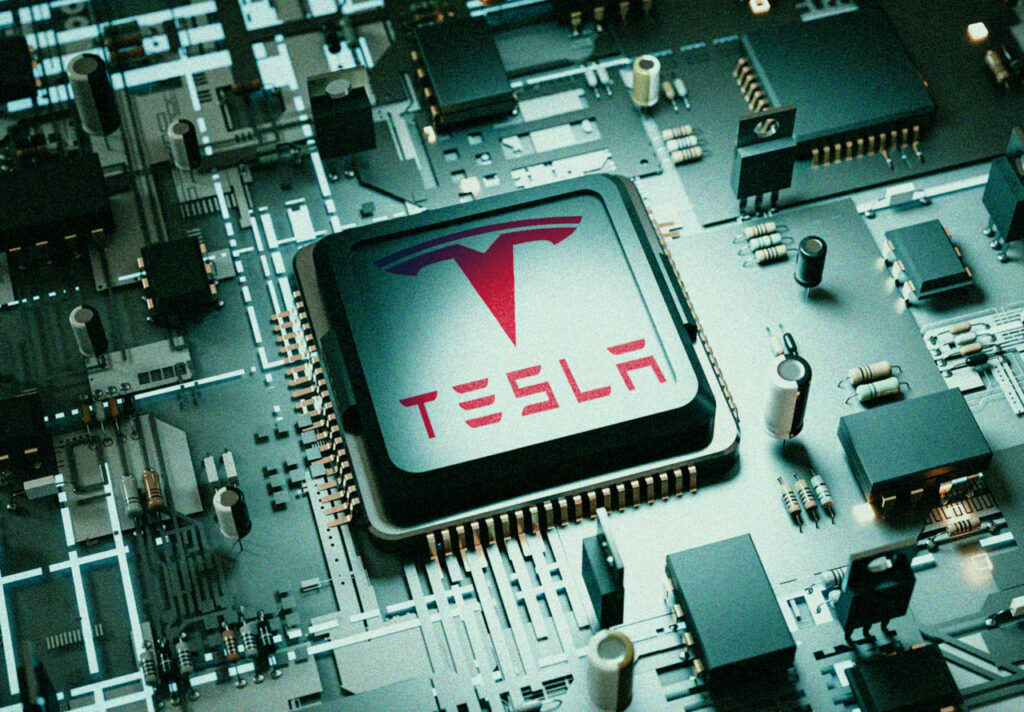
Long recognized as a disruptor in the automotive and energy sectors, Tesla is increasingly making waves in a new domain: advanced computing. Recent developments concerning its proprietary AI5 chip have ignited significant interest, with investors eagerly watching as the technology completes a crucial milestone. This advancement is prompting a re-evaluation of Tesla's identity, raising the compelling question: Is the electric vehicle pioneer now poised to become a formidable player in the high-stakes semiconductor industry?
Tesla's Bold Leap into AI Hardware
The AI5 chip represents a significant step in Tesla's ambitious foray into artificial intelligence hardware. Designed not for its current fleet of electric vehicles, but for next-generation applications, this powerful processor is slated to drive groundbreaking technologies. Tesla has indicated that the AI5 will serve as the computational backbone for its much-anticipated humanoid robots and fuel the colossal processing demands of its supercomputers, pushing the boundaries of what's possible in AI and automation.
The AI5 Chip's Core Function and Significance
The successful completion of a critical development step for the AI5 chip underscores Tesla's commitment to vertical integration and technological autonomy. This milestone suggests the chip has moved past a significant hurdle in its design, testing, or early production phase, validating its potential to handle the immense data processing and intricate algorithms required by advanced AI systems. For humanoid robots, such a chip is vital for real-time perception, decision-making, and complex motor control. In the context of supercomputers, particularly those like Tesla's Dojo, the AI5 is expected to accelerate the training of massive neural networks, crucial for developing sophisticated AI models at an unprecedented scale.
A Strategic Shift Beyond Electric Vehicles
While Tesla's automotive division remains its most visible enterprise, the development of the **Tesla AI chip** signifies a profound strategic pivot. This move positions the company not just as a car manufacturer, but as a comprehensive technology firm deeply invested in foundational AI research and hardware. By designing its own silicon, Tesla gains unparalleled control over the performance, efficiency, and security of its AI stack, differentiating itself from competitors who often rely on third-party chip suppliers.
From Automotive to Advanced Computing Leadership
Tesla's journey into chip design isn't entirely new; its Full Self-Driving (FSD) computer, developed in-house, already powers its autonomous driving capabilities. The AI5, however, expands this ambition significantly into general-purpose AI and supercomputing. This aggressive push into semiconductor development positions Tesla to potentially become a key supplier of advanced computing power, both internally for its own projects and possibly externally in the future, marking a substantial expansion of its technological footprint.
Investor Enthusiasm and Market Repercussions
The positive reaction from investors to the AI5 chip's progress is palpable. This enthusiasm stems from the potential for new revenue streams, enhanced technological leadership, and a broader diversification of Tesla's business model. A successful proprietary AI chip could significantly reduce costs associated with external hardware, improve product performance across various divisions, and potentially open up licensing opportunities or sales of these advanced processors.
Redefining Tesla's Valuation and Market Perception
Traditionally valued primarily on its automotive production and energy solutions, Tesla's deepening involvement in semiconductors could lead to a re-rating of its stock. The company might increasingly be viewed not just through the lens of traditional auto manufacturers, but alongside tech giants renowned for their innovation in AI and chip design. This shift could command higher valuations, reflecting its expanded total addressable market and its role as a frontrunner in critical next-generation technologies like advanced robotics and supercomputing.
The Road Ahead for Tesla's Semiconductor Ambitions
While the completion of a 'critical step' is undoubtedly significant, the path from prototype to widespread deployment for any advanced **Tesla AI chip** is long and complex. Future challenges include scaling production, achieving cost-efficiency, and ensuring seamless integration into its various hardware platforms. The semiconductor industry is fiercely competitive, with established players constantly innovating. Tesla's success in this arena will depend on its ability to consistently deliver performance, reliability, and innovation that surpasses existing solutions.
Ultimately, Tesla's AI5 chip milestone transcends a mere technical achievement; it signals a profound evolution of the company itself. As it continues to push the boundaries in robotics and supercomputing, driven by its proprietary silicon, the question of whether Tesla is a chip stock is becoming less a hypothetical and more a reflection of its undeniable technological trajectory. This strategic expansion solidifies Tesla's position not just as a leader in electric vehicles, but as a significant and emerging force in the broader landscape of artificial intelligence and semiconductor innovation.
Fonte: https://www.marketwatch.com